Showing posts with label art. Show all posts

13 May 2011

reflecting: Ephesians 5:8-20

This Sunday I have the privilege of continuing the theme that we’ve been hitting on post-Easter. The resurrection is so central to the Christian faith it must have some pretty major implications.

It means that we have a new identity (Ephesians 2:1-10), marked not by our performance or the road that we’ve paved (cause that’s gotta end, and it will definitely end in the grave).

It means that we have a new conception and possibility for community (Ephesians 2:11-21), surprisingly open to different people than the ones we see in the mirror (and the resurrected Jesus tells us through Paul’s writings that this is an occasion for praise and not fear or strife).

And this week we find that we have a new resurrection language (Ephesians 5:8-20): Song. (song?!) That can’t be right, with all the bad stuff going around we need ways to speak that do things, good things, and you’re asking us to make music?

Here’s a parable about what possibilities song has following Jesus’ victory over death in the resurrection. I look forward to seeing you there!

04 February 2011

reflecting: Mark 1:1-8

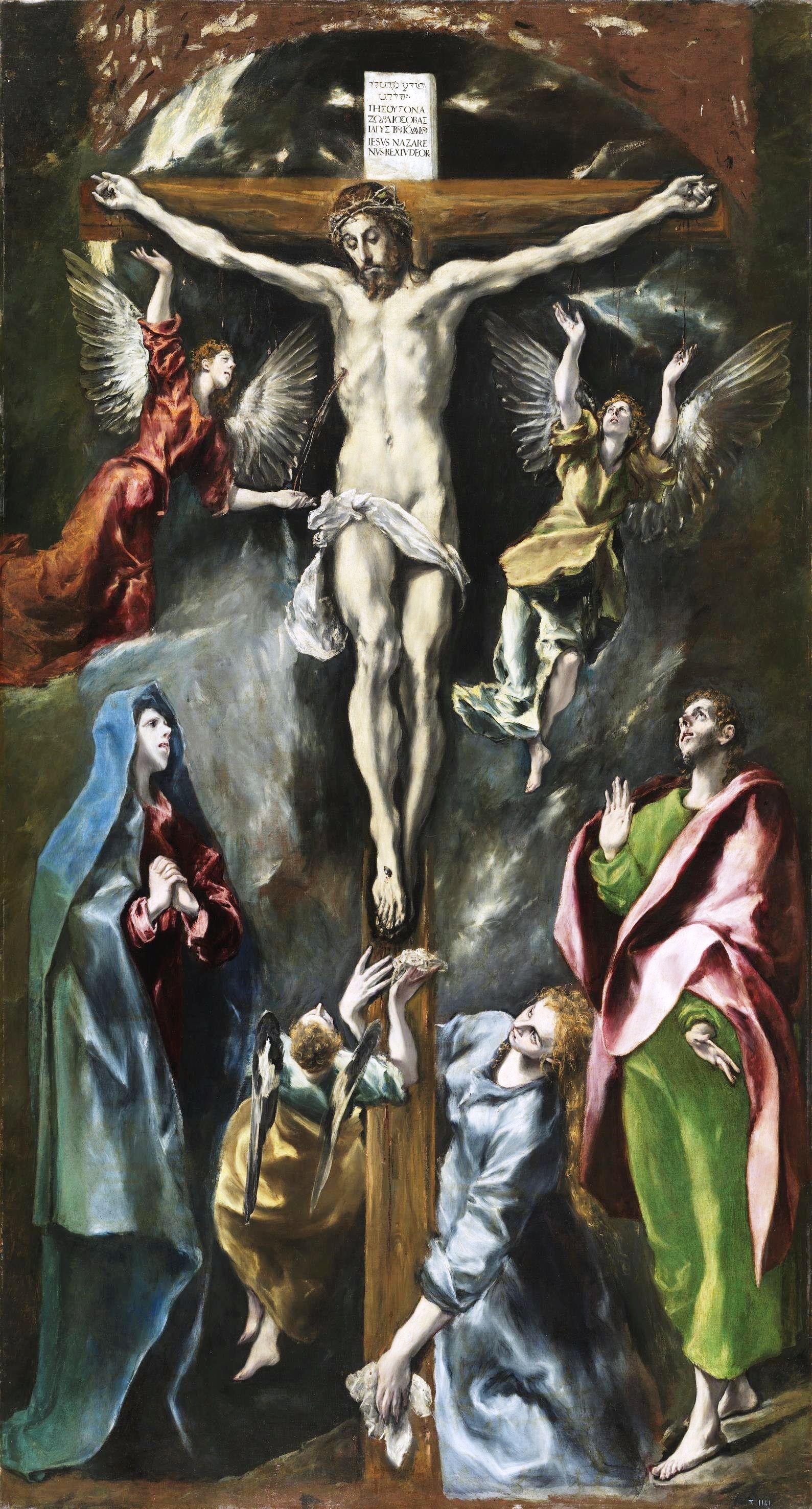
As I start to read Mark in preparation for a lengthy sermon series at the Gathering Church, I’m arrested by the opening scene.  Mark cuts right to the chase, not softening us up with any genealogies or birth (/pre-Creation) narratives.  Mark’s “beginning of the Good News of Jesus Christ, Son of God” is only prefaced by a messenger.  Preconceived by the prophet Isaiah and actualized by a strange bird named John.  John, preparing.  John, pointing.  John (as we find in the evangelist John’s gospel), decreasing that Christ may increase.  I can’t help but recall Karl Barth’s comment on this scene as visually portrayed in the center panel of Grunewald’s Isenheim altarpiece (which a print hung above Barth’s desk for more than fifty years).  He offers in Church Dogmatics, “…one might recall John the Baptist in Grünewald’s Crucifixion, especially his prodigious index finger.  Could anyone point away from himself more impressively and completely?”  What a challenge!  What a vocation!  To  prepare.  To point.  To decrease that Christ may increase!
Come Holy Spirit!  
Let us remember our baptisms that we may live into this life of witness to which we are called.  
Let us point to Christ, who is the image of the invisible God.
Amen.

27 September 2010

review: Megafaun/Fight the Big Bull/Sharon van Etten/Justin Vernon live @ Hayti Heritage Center


Originally Published at The Blue Indian on September 27, 2010.


We settled into the back pew of Saint Joseph’s AME Zion on a Friday night quite aware that we were in what used to be used as explicitly sacred space.  What I’m not sure we immediately realized, but understood soon enough was that we were there for some sort of revival.
Walking into an empty sanctuary, my eyes sweepingly moved from the elaborate crown molding and ceiling installation to the old balcony hanging close and low enough for the preacher to receive some of the overflow: either rote, fanned air or spontaneous, dripping Hallelujahs! They panned down to the anachronistic contraptions cluttering the stage and the wires pouring into each and every of the 46 channels of the house soundboard.  Then they wandered around what, on this occasion, is  a congregation made up of hipsters, no more or less distracting than the usual Sunday gang, though with get-up constituted of rimmed glasses, beards, and half-sleeve tats rather than pin-striped suits and ornate hats.  An odd “Who’s Who.” Notably, but not exhaustively, filled with Mountain Goats and Rosebuds.  A vast array of the NC Triangle’s best, looking oddly out of place, not because of the ecclesial surroundings, but rather because of their bizarre idleness.  A Friday-night sabbatical.
Finally, hosts/cogs/chief kids-in-the-candy-store, members of avante-folk group Megafaun, took the stage to an anticipatory applause and then sheer, holy silence.  The intro song was a fitting tone-setter for the night.  Armed with a washboard and empty hands made for clapping, the Cook brothers and Joe Westerlund interpreted the old Green Sally Up for new ears.  That was to be a theme for the night: interpretation.  Alluded to and matched only by the other pervading theme: collaboration.  Mumbling, self-deprecating, and assuredly sober, de facto emcee Brad Cook mentioned of the set of songs taken from the box set of Americana standards and obscurities compiled by Alan Lomax, “We found these songs together.  We want to share them with you together.  Here’s how we interpret them.”
As the night wound on, the backing band, Fight The Big Bull, from Richmond VA, not only textured what the Cooks had in mind, but created an entirely new world.  And praise the Lord that they did, because this realm featured some truly special moments and characters.  We saw Bon Iver front man, Justin Vernon (just “Vern” that night…) transfigured before our eyes: from brooding cabin-fevered freak-folker to bolo-tied, Most-Reverend-Al-Green, tambourine man in numbers like Calvary and I Want Jesus to Walk With Me.  We witnessed guest Sharon Van Etten offering her sweetly eerie take on the onomatopoetic nursery rhymes of Almeda Riddle, reminiscent of Natalie Merchant's handling of Woody Guthrie’s set on the Mermaid Avenue discs.  She pulled and tugged at her black slip dress until the bawdy Coll Water Blues slid throughout the late summer evening.  The two combined for a Book of Revelation recounting in Tribulations that yowled truthful tales of dragons and blood baths in a familiar David Rawlings/Gillian Welch idiom.
The climax of the night was one the cool crowd seemed not ready or fully equipped to embrace.  What grew to a critical mass of thirteen musicians on stage at one time lead the “congregation” in shape-note singing and evoked claps, stomps, hallelujahs, and aisle-dancing.  Between the band’s extensive brass section, lead by a spectacular muted-trumpet and the singular percussive madness of Westerlund’s seemingly bottomless box of noisemaking accoutrements, unwarned, Mardi Gras (or maybe Pentecost) fell upon Durham, North Carolina.
But, just when our tongues were loosed, it was over.  They were gone.  Or so it seemed, until a last-gasp encore yielded a choired reprise of another group of “Northerners attempting a song about the South”: Robbie Robertson’s The Night They Drove Old Dixie Down.
Though, perhaps the most touching moments of the night weren’t the ethereal or transportive performance moments (which were bestowed in spades), but rather the also abundant, candidly earnest glances and smirks between the players; telling in their incredulity and unadulterated joy.  They spoke of a certain danger (“is this happening?”), but more so of surging delight (“this is really happening!”).
I am thankful to have taken all of this in: the sacred intimacy furnished by the hardwood pews to the blessed verity of the sounds that swept through the aisles and filtered up to the balcony.

10 September 2010

jamming: Matt Hires live @ The Cat's Cradle

Eschewing the drive to Hopscotch for some lighter, closer-to-home fare.  Starting out at Wyatt's photo exhibit and finishing up at the Cradle with one of Rach's childhood friends, Matt Hires.

05 July 2010

processing: Summer 2010 Reading (I)

For The Beauty of the Church
Ed. David Taylor
Since meeting a popular songwriter we hosted in college and being told to check out Steve Turner's Imagine, I've maintained a detached interest in the merger of theology and the arts.  As my theological mind has expanded, so too has my appetite for this intersection.  Duke's (by way of Austin, TX) David Taylor writes and edits this wonderful volume replete with talented and interesting authors and a panoply of perspectives.  Besides Peterson, who can hardly do wrong by me, I was surprised, edified and provoked by John Witvliet Worship piece (I look forward to thinking about original songwriting & worship with some amazing songwriters in our community) and especially Jeremy Begbie's musing on Art and Eschatology.  I highly recommend this to anyone who's ever even considered the role of art in the life of the Church.

Practice Resurrection
Eugene Peterson
The capstone to his prolific Spiritual Theology series, Peterson embarks on a thorough and serious treatment of growing up, being the Church, and living in terms of the resurrection existence Christ inaugurated, as articulated by the letter to the Ephesians.  I really appreciated how constructive this work was.  While providing harsh and prophetic criticism towards the failed and unfaithful ways we North American Christians attempt to build, progress, and grow, the tone and timbre of the whole matches the exciting, creative, and counterintuitive character of the great biblical letter it explicates.

Resident Aliens
Stanley Hauerwas and Will Willimon
About halfway through this book I really began to resent whoever chose our entrance reading requirements a couple years ago for Duke.  While Dean Well's Power and Passion was somewhat helpful, I can't really think of something else that could provide such a succinct and challenging primer to how things are thought and done at Duke than Prof. Hauerwas' and Bishop Willimon's landmark book.  I might have spoken louder, earlier, and more often in some precepts had I tackled this one prior to the summer before my final two semesters.  Spanning ecclesial ethics, the dangers of no-holds-barred modernism, and introing a Yoderian, post-Constantinian vision, these two master communicators also realize the importance of both eschatology and worship for the life of the Church in the world.  This work begs to be engaged with and achieves the provocation the cover advertises.

The Prodigal God
Tim Keller
I was really excited to dig into this one.  The final parable in the Luke 15 series has always been one of my favorites to read, preach, and re-evaluate.  This fall at Gathering Church, we're looking to focus on Keller's take.  His dealing stuck me as a bit unique, devoting a lot of space to the consideration of the older brother in the story (and going on to portray Jesus as True Elder Brother), going as far as to interpret him as but one of a couple of Lost Sons in the story.  I liked the accessibility and intrigue created by this.  It seems it will be a great entry point for those without a ton of study and small group experience as well as those, who know the story well.  It also made me go back to last summer's read: Volf's Exclusion and Embrace, to re-visit his brilliant exegesis of the characters within this keystone parable.  One main gripe I have is the  over-villianization of the Pharisee character in the story.  While I don't deny the teeth the the story has towards that crowd, the NPP-reader and Mel Gibson critic in me cringes at the careless portrayal of Jews as the epitome of flagrant unfaith.  All this said, I'll return back to Prodigal God (no spoiler alert: prodigal means extravagant, excessive) quite a bit more as a resource.

Deep Church
Jim Belcher
Anyone looking for some sort of positive assessment of the messy tangle encountering evangelical(-ish) church-life to come, should pick this one up.  Belcher offers an accessible and erudite survey of the landscape and painstakingly critiques and offers a way forward (which he, following CS Lewis coins the deep church).  This "third way," for him, is rarely a synthesis of the other two poles, though Belcher possesses all the charity, skill, and machinery to form such syntheses.  Belcher instead looks and, more often than not, finds a true new way.  This way of Orthodoxy and Engagement, truth and warmth, set-apartness and engagement must be the way forward and the type of leaders needed for such a grand endeavor must be committed to ecumenism, creativity, and generosity.  I thoroughly enjoyed this book.  It accurately mapped and widely conversed un order to generate a gravitational vision around the Triune God in community.  Well done.

07 April 2010

screening: Spoken Word, Preaching Visuals, & Prophetic Jesterdom

Topics from today's preaching class:

Spoken word poetry as embodying and unleashing the Word.


Using visual media to deliver and enhance the message.
Using humor/satire/fable as a subversive, prophetic, surprising alternative.

11 March 2010

Confession: of Light, Mirrors, Basins & Towels

We want our confessions to take place in the dark.

We want dark confessional booths with screens between us and our confessor, whether that confessor is our God, our priest, our friends, our spouse, or ourselves.  We want anonymity.  We want our faces to be digitally obscured and our voices to be scrambled.  And then, only then, might we freely confess our shortcomings, sins, failures, and regrets.

This doesn’t fit well with the image of walking in light and fellowship with one another found in 1 John 1.  The picture we get there is not solitary and dark, but rather communal and light.  Transparent and open.  Free and unbound.

I recently had the opportunity to bodily engage with and reflect upon this kind of confession.  This past month, there has been an art exhibit up in Durham, fittingly titled The Confessional.  The artist (Carole Baker) was inspired by the story of the woman caught in adultery and facing execution (John 8).  When Jesus encounters the woman and her accusers he disarms the situation by causing everyone present to reflect on their own sin.

There is no longer an accused and accuser.  There is no longer condemnation and judgment, but rather truth and mercy.  The dark/light divide has been broken down and Jesus has shed light on the whole scene.

The exhibit features a cumbersome, room-sized wooden crate.  Stepping inside this “confessional booth,” you are surprised.  Rather than darkness and privacy there are mirror-lined walls, a pile of stones, and the unavoidable scripture text, “Let the one who is without sin throw the first stone," (Jn 8:7).  Immediately you are forced to look yourself in the eyes.  You see yourself from many angles.  There are no shadows or corners where you can hide.  It may sound creepy, but it became soothing.  Cathartic.  Sure there was a moment of startled unease, seeing yourself, again and again, with all your frowns and blemishes.  But then there was a freedom, a comfort, and a curiosity.

The next phase of the exhibit was a sparse room with white walls.  The only items in the room were a chair, a pitcher, a basin, and a towel.  After confronting myself in the mirrored room, I was very convinced that the chair was not for me.  

The towel, pitcher, and basin were.  

Only by confronting and confessing my selfishness, am I able to embrace my identity as a servant.

I pray that we, as a community, recognize confession as a practice where we can move from darkness to light, loneliness to fellowship, and selfishness to service.

But if we walk in the light, as he is in the light, we have fellowship with one another, and the blood of Jesus his Son cleanses us from all sin.
(1 John 1:7)

Visit the original post at allgather.org.

05 December 2009

Advent Week 2: "The Irreverent Doctrine of the Incarnation"

In the preface of the Phillips Bible paraphrase (kind of a precursor to the Message), CS Lewis offers a word relating the bible text to the incarnation. He likens the particularity and style of the Greek text as betraying its writers of not being necessarily in full command of the language of our sacred Text. Here is an unique and interesting thought and meditation for our Advent preparation and bible-reading.

"Does this shock us? It ought not to, except as the Incarnation itself ought to shock us. The same divine humility which decreed that God should become a baby in a peasant-woman's breast, and later an arrested field-preacher in the hands of the Roman police, decreed also that He should be preached in a vulgar, prosaic and unliterary language. If you can stomach the one, you can stomach the other. The Incarnation is in that sense an irreverent doctrine: Christianity, in that sense, an incurably irreverent religion. When we expect that it should have come before the World in all the beauty that we now feel in the Authorized Version we are as wide of the mark as the Jews were in expecting that the Messiah would come as an earthly King. The real sanctity, the real beauty and sublimity of the New Testament (as of Christ's life) are of a different sort: miles deeper and further in."

O God,
you wonderfully created
and yet more wonderfully restored
the dignity of human nature;
grant that we may share the divine life
of your Son Jesus Christ,
who lives and reigns with you
in the unity of the Holy Spirit,
one God now and for ever.
Amen.

01 November 2009

praying: on All Saints Day


Mary-born Lord, humble us so that we also might say, "Let it be with me according to your word."

We are tempted to will our way to humility because we just do not trust you with your creation.

Someone has to make this world come out right. Thank you for surrounding us with your saints, whose lives remind us what your work looks like.

Your saints are a funny lot- weird and wonderful. They often make us laugh, Sarah-like, and through laughter we discover humility.

God, it is wonderful to be made a part of your entertainment so that the world might be freed from sin. Amen.

(taken from Dr. Hauerwas' Prayers Plainly Spoken: "Your Saints Are A Funny Lot")

29 September 2009

praying: on the Feast of St. Michael and all Angels (from the BCP)

The Collect.

O EVERLASTING God, who hast ordained and constituted the services of Angels and men in a wonderful order; Mercifully grant that, as thy holy Angels always do thee service in heaven, so, by thy appointment, they may succour and defend us on earth; through Jesus Christ our Lord. Amen.

For the Epistle. Revelation xii. 7.

THERE was war in heaven: Michael and his angels fought against the dragon; and the dragon fought and his angels, and prevailed not; neither was their place found any more in heaven. And the great dragon was cast out, that old serpent, called the Devil, and Satan, which deceiveth the whole world: he was cast out into the earth, and his angels were cast out with him. And I heard a loud voice saying in heaven, Now is come salvation, and strength, and the kingdom of our God, and the power of his Christ: for the accuser of our brethren is cast down, which accused them before our God day and night. And they overcame him by the blood of the Lamb, and by the word of their testimony; and they loved not their lives unto the death. Therefore rejoice, ye heavens, and ye that dwell in them. Woe to the inhabiters of the earth and of the sea! for the devil is come down unto you, having great wrath, because he knoweth that he hath but a short time.

The Gospel. St. Matthew xviii. 1.

AT the same time came the disciples unto Jesus, saying, Who is the greatest in the kingdom of heaven? And Jesus called a little child unto him, and set him in the midst of them, and said, Verily I say unto you, Except ye be converted, and become as little children, ye shall not enter into the kingdom of heaven. Whosoever therefore shall humble himself as this little child, the same is greatest in the kingdom of heaven. And whoso shall receive one such little child in my name receiveth me. But whoso shall offend one of these little ones which believe in me, it were better for him that a millstone were hanged about his neck, and that he were drowned in the depth of the sea. Woe unto the world because of offences! for it must needs be that offences come; but woe to that man by whom the offence cometh! Wherefore if thy hand or thy foot offend thee, cut them off, and cast them from thee: it is better for thee to enter into life halt or maimed, rather than having two hands or two feet to be cast into everlasting fire. And if thine eye offend thee, pluck it out, and cast it from thee: it is better for thee to enter into life with one eye, rather than having two eyes to be cast into hell-fire. Take heed that ye despise not one of these little ones; for I say unto you, That in heaven their angels do always behold the face of my Father which is in heaven.

12 July 2009

preaching: Two Fear-full Kings

RCL Texts: Proper 10: 2 Samuel 6, Mark 6 Preached July 12, 2009 Allensville/Trinity UMC Charge Roxboro, NC

What makes a great leader?

Powerful presence? Personality? People Skills? Intelligence? Integrity? This question is unavoidable during election season, but also confronts us almost everyday whether we are leaders or whether our station and role is as followers and evaluators. Much money is spent and made in the book publishing, opinion polling, seminar, and educational industries trying to figure out and share some insight on just this question.

This Sunday our Lectionary texts provide us with a couple thought-provoking accounts of biblical “kings”. We are able to examine their mettle to see what they get right and wrong and try to understand, in a biblical framework, what God asks of us as followers of Christ and leaders of our selves, households, churches, businesses, and communities.

The Old Testament reading provides the story of good king David. We know all about David: from his shepherding days on the Judean hillsides, his unlikely defeat of the monstrous Philistine, his flight from Saul & friendship with Jonathan, his anointing as Israel’s king, his sinful rendezvous with Bathsheba and the subsequent slippery slope of deception and sin on to his repentance and the restoration of his legacy as a “man after God’s own heart” (1 Sam 13:14). Here we find David, just after taking hold of the throne (before the Bathsheba episode) bringing up the Ark of the Covenant to Jerusalem after taking it back from the Philistines. We may not grasp the importance of this ark, but for the people of Israel, it was of utmost consequence. The ark physically expressed God’s presence among God’s people in their travels- and eventually fixed their worship in the City of David- Jerusalem. It kept before them the God they knew, the God that was personal in their history: the God that created them, covenanted with them, blessed them, sustained them in the wilderness, and saved them from their oppressors. Most importantly, it constantly illustrated and reminded them of their God that loves them, perfectly and without condition.

David’s guidance and leadership of the People of God was resoundingly important in the salvation history of Israel. This morning though, we focus not on the act or event performed by David, the physical bringing of the ark, but on the way in which he performed it. The scripture says that he sacrificed in reverence, gratitude, and deference to the Lord. In the end it was not lost on David that the entire meaning of what he was doing in this grand event was for the worship of the Lord. How easy is it for us in our godly pursuits, both great and small, to neglect God, the one we pursue!

We recall Saint Paul’s famous warning & encouragement in 1 Corinthians 13 and imagine David tiptoeing both extremes: both speaking and acting in love and making a lot of noise and ruckus in the meanwhile! We are told: David danced before the LORD with all his might…David and all the house of Israel brought up the ark of the LORD with shouting, and with the sound of the trumpet…[David was] leaping and dancing before the LORD. David’s wild celebration and dancing certainly didn’t spare the emotional fireworks, trumpets, gongs, and cymbals. But due to the unruly, intense, and to borrow Rev. Bogey’s phrase from last week: “Wildness!” in his love of God, his celebration and rejoicing was pleasing and celebratory of God.

We then fast-forward to our gospel reading where the evangelist plops us inside of King Herod’s court, who ironically was not even technically a king, but a weird Jewish/Roman ruling figure known as a tetrarch (who ruled ¼ of Judea, but in actuality had little sway apart from what Rome wanted: a figurehead of sorts). The fact that he is mentioned as a king seems not to be sloppy work by the writer, but rather a way of comparing and contrasting Herod to the one in question: Christ- The King of Kings.

Mark’s account retells what Herod had done to John the Baptizer: had him beheaded! It appears that John had two marks against him: he spoke up against a corrupt marriage of Herod and Herod’s daughter had a grudge against him. One curious little detail in the text is the phrase in verse 20: Herod feared John. Before all this, most of what characterizes John is his wardrobe and his diet: camel hair and locusts. In some ways this might strike fear into the hearts of posh royalty, I’m sure. I’m sure though that John’s truth-telling had more to do Herod’s fear than his kooky appearance. Knowing these two strikes against John (truth-telling and Herodias’ grudge) we find out two important things about “King” Herod’s fear. First, the gospel reading notes that Herod feared John “for he was a holy and righteous man.” Herod is actually pretty on track with this. He kept John safe because John was connected to God. Church tradition is pretty unanimous in John’s role as the voice crying out in the wilderness, preparing the way of the Lord (Is/Lk 3:4). Herod seems to recognize this. But where he goes wrong is when this healthy fear is superseded by the superficial fear that develops when he makes an unwise promise to his daughter and must face his guests and her. Quite simply, he allowed both personal convenience and selfish fear to overwhelm his fear of the Lord via John!

Afterward we are told that Herod is “exceedingly sorry” for having to carry out such an awful deed, and we must assume that that sorrow sprung from his realization of his own weakness, betrayal, and cowardice. How often do we submit to people and situations of which we are ashamed? We choose against our intuition, against the fear of the Lord and choose to fear men. How often do we let convenience dictate our actions? We seek the wrong things not necessarily because we want them, but because we feel trapped by our options, or intimidated by the consequences.

God, grant us the strength, purity of mind and purpose to fear you. Not humans, not ourselves, but You alone. Grant us patience and endurance. Sustain us in the difficulties and trials we may feel by following you and seeking Your Kingdom and not our own.

We return to the reading from 2 Samuel. If we’ve really paid attention we may realize that the lectionary text omits a crucial aspect to understanding the connection between these 2 stories. David’s success in bringing the Ark up to Jerusalem is actually his team’s second attempt. The first one went wrong in a big and tragic way.

We are told, that David instructed Uzzah and Ahio to bring the ark up. It seems that they chose somewhat of a short cut, or maybe more accurately: an innovation or convenience to do this. They assembled a cart, probably a fancy and well-built cart, to bring the ark up. During their attempt however, it seems they hit a bump in the road and an ox stumbled, in order to save the ark from falling and crashing, Uzzah did what most of us would do and lunged to save it. Then we are told (and its no wonder we don’t read this because it is curious at best) that because of his error Uzzah was struck dead by God (for the KJV purists: Uzzah was smote by God).

What was David’s reaction to this? Following this, David was both angry at and fearful of the Lord. Honesty. Uncertainty. Fear. Recognition of a power beyond his own. Someone else is calling the shots! The narrative then moves on to the second, successful attempt in which they bring the ark up, by hand, to its resting place in the city.

So what are we to make of this? All that anger, fear, and uncertainty gone? The text says that David danced joyously before the Lord with delight and worship- indeed with all his might (echo of Deut 6:5?). The loss of Uzzah was unfortunate, no less than tragic, but it seemed to be a method by which God got David’s attention and redirected the mission of David’s office. It purified David’s work. It stopped David’s work dead in its tracks. The initial failed episode portrayed David as enthusiastic and willing, but careless. In delegation and haste, he lost the essence of his mission. That essence, the primary purpose of his work was the personal, deliberate, and painstaking care of the representation of God- the Ark. Personal, deliberate and painstaking like loving the Lord with heart, soul, and strength! As soon as David had his eyes opened, as soon as his carelessness cost a life, David, being after God’s own heart, reevaluated, angrily struggled, and eventually regained the fear and reverence he never should have forgotten in the first place.

To answer our original question, we may conclude that David’s leadership strength boils down to one thing: fear of the Lord. This strength is the same almost-strength of the almost-king Herod. Herod thought to be afraid; to stop and wonder at the holiness of the Baptist’s person and mission. Then he shelved such an all-important notion in favor of self-preservation and social esteem. Herod’s fear was misguided. Herod’s love was certainly incomplete.

My OT professor over this past year stressed to the point of annoyance that, when we read, we must pay attention to the beginnings and endings of stories; that the main point is often revealed up front or rehashed at the end, and can change the way you look at the rest of the story. Heeding that wise instruction that we find that the whole of the book of 2 Samuel in fact ends with a symbolic display of David’s fear and reverence of God by building an altar to the Lord. Also, in a classic case of fatherly wisdom passed down, we find that Solomon’s first proverb instructs us that “fear of the Lord is the beginning of knowledge.” No doubt, David learned to fear the Lord, learned to bend the knee to God out of reverence and out of humble respect. It is in this fear that he ruled over the people of God with justice and provided them and us an example of what it means to lead people by following God. This fear is not a fear of tears and terror though, for we see the profound movement in David’s emotions: from anger→fear→joy. We too must understand that it is in our honest interaction with God, and our fearful reverence of God’s majesty, power, and might that we eventually may rejoice in the salvation and freedom that God provides. So David dances, wildly and without regard to even the disdain of his own wife, because his dance is before the Lord alone and marks the resolution to his intense struggle with his God. We find David not embarrassed, not timid, not trying to be tough or dignified, but utterly joyous and able to act in true, unruly, and wild praise of the God of his salvation.

Theologian Karl Barth once preached of where this came from, the wisdom and fear to which David clung, Herod abandoned, and we seek by explaining, “The fear of the Lord springs from the discovery that God calls us unto himself and that his calling urges us to wake up, to arise, and to begin to live as his children.” It is as God’s children that we jump awake, rise in a joyous Davidic dance together, and live fearful and wonderful lives as created beings of a living, loving God. Amen.

(David painting: Caravagio, John the Baptizer painting: Luini)

25 May 2009

praying: for memorial day: 'thanksgiving for those who preceded us'

"Our Father, you who have mothered us by giving us good forebears, we thank you for those who have preceded us. Without them, faithful and unfaithful, we would not be. Often we little understand what they must have been like, yet they passed on to us a sense of how wonderful it is to be your people. may we be capable of producing yet new generations born of your hope. Amen."

*Prayer by Stanley Hauerwas, Painting by Jasper Johns.
While I sincerly doubt this prayer would have necessarily been prayed in a memorial day setting, its humility and perspective seem apt.

19 May 2009

screening: Synecdoche, NY; Doubt; Diving Bell & The Butterfly

Synecdoche, NY
First of the 2 Phillip Seymour Hoffman films. I didn't really appreciate the scattered and seemingly pretentious musings of Charlie Kaufman. It had all of the weirdness of his other ones without the charm and humor. Maybe I just missed it altogether or maybe I turned it off too soon, either way, though I really looked forward to this one, I was heartily disappointed.

Doubt

Awesome. Hoffman utterly redeemed himself. Streep and Adams were perfect. This really strummed the right note of my parochial school upbringing. I highly recommend this one mostly for its acting and ability to leave a sticky ethical situation to the viewer's imagination, and it's final conclusion that that imagination and those things left unsaid is perhaps the harshest judge of reality. No need to be explicit when you can craft a complex story and characterization, which in the end teaches at a deeper and longer-lasting level.

Here is a great clip of Hoffman at his best, behind the pulpit in a good ole fashioned Irish-Catholic homiletic attack:


Diving Bell & The Butterfly
If the first movie was too weird for me, and Doubt was perfect in its subtlety, DB&B broached some middle ground (in French) while expanding towards an abstract and non-linear presentation akin to movies like 'Big Fish' & 'What Dreams May Come'. For starters, the story is so brilliant that it could only be non-fiction: playboy Elle' magazine editor suffers a stroke leaving him essentially locked in his own body unable to translate his brilliant, literary mind and faculties through any other channel than a single eye's blink. But it is through this sharp mind and speech therapist's 'Morse code' system that he dictates an entire transcript. The result is a melancholy and poignant narrative monologue plumbing the depths of his condition via a diving bell and soaring to the heights of love and imagination on the wings of a Butterfly. Particularly resonant scenes were the Madonna of Lourdes scene and the shaving scene with his senile father.

05 May 2009

processing: Reconciliation Poetry

Both the tapestry and poem were part of the "Reconciling All Things" Art
Exhibit over the last month at the Div School.


Easter Garment

Gather He does unto Himself threads of human life
The sorrows, the sores, the aches, the wars
But more than just the strife

While He gathers those who hunger, He gathers grains of wheat
While He gathers those who thirst, He gathers waters sweet
While He gathers those alone, He gathers welcome places
While He gathers those exposed, He gathers sheltered places

Unto Himself He gathers counsel for the inebriated
Unto Himself He gathers keys for the incarcerated
Unto Himself He gathers courage for the latent
Unto Himself He gathers panaceas for the patient
Unto Himself He gathers sages for the fool

Reconcile all things He does with His finger, frame, and spool
Into a Holy garment revealed on Easter day.
All things reconcile with His love, his life, his way.
Reconcile all things with His love, his life, his way.
All things are reconciled with His love, His life, His way.


Emily Isabelle Kroeger
Duke Divinity School
March 27, 2007

22 April 2009

Earth Day with Saint Francis

Canticle Of The Creatures
St. Francis of Assisi

Most high, all-powerful, all good, Lord!
All praise is yours, all glory, all honour
And all blessing.

To you, alone, Most High, do they belong.
No mortal lips are worthy
To pronounce your name.

All praise be yours, my Lord, through all that you have made,
And first my lord Brother Sun,
Who brings the day; and light you give to us through him.
How beautiful is he, how radiant in all his splendour!
Of you, Most High, he bears the likeness.

All praise be yours, my Lord, through Sister Moon and Stars;
In the heavens you have made them, bright
And precious and fair.

All praise be yours, my Lord, through Brothers Wind and Air,
And fair and stormy, all the weather's moods,
By which you cherish all that you have made.

All praise be yours, my Lord, through Sister Water,
So useful, lowly, precious and pure.

All praise be yours, my Lord, through Brother Fire,
Through whom you brighten up the night.
How beautiful is he, how gay! Full of power and strength.

All praise be yours, my Lord, through Sister Earth, our mother,
Who feeds us in her sovereignty and produces
Various fruits with coloured flowers and herbs.

All praise be yours, my Lord, through those who grant pardon
For love of you; through those who endure
Sickness and trial.
Happy those who endure in peace,
By you, Most High, they will be crowned.

All praise be yours, my Lord, through Sister Death,
From whose embrace no mortal can escape.
Woe to those who die in mortal sin!
Happy those She finds doing your will!
The second death can do no harm to them.

Praise and bless my Lord, and give him thanks,
And serve him with great humility.

Let all things their Creator bless,
and worship him in humbleness,
O praise him, Alleluia!
Praise, praise the Father, praise the Son,
and praise the Spirit, Three in One
O praise him, O praise him,
Alleluia, alleluia, alleluia!

*photo courtesy of fellow Son of Thunder Eric Prenshaw: Yosemite.

26 March 2009

Songs of John, Bill, & Salvador.

We ran through Song of Songs in OT class. Beautiful. Erotic. Holy. Scary to interpret. The image of encounter with God in a physical way is intimidating, it is sometimes much easier for me to relegate God to the clouds than deal with fleshly, corporeal depictions (irony: Word became Flesh).

Three more or less contemporary pieces of art (poetry, song, painting) ring this bell for me:

1. Dr. Steinmetz brilliantly (per usual) quoted a poem by John Donne (who himself toes the uncomfortable line between smitten romantic and clergy) to illustrate the relentless and ultimately irresistible pursuit of God towards man. The language is brutal & graphic.

Batter my heart, three-person'd God, for you

As yet but knock, breathe, shine, and seek to
mend;
That I may rise and stand, o'erthrow me, and bend

Your force to break, blow, burn, and make me new.
I, like an usurp'd town to'another due,

Labor to'admit you, but oh, to no end;
Reason, your viceroy in me, me should defend,
But is captiv'd, and proves weak or untrue.

Yet dearly'I love you, and would be lov'd fain,

But am betroth'd unto your enemy;
Divorce me,'untie or break that knot again,

Take me to you, imprison me, for I,

Except you'enthrall me, never shall be free,

Nor ever chaste, except you ravish me.


2. This VOL song got Slow Dark Train yanked from the shelves of your local Family Christian back in the day, I wonder why?

Honey, I wanna attack your flesh with abandon

I wanna look for your fruits
I wanna put my hands on them
Pump up the thermostat beneath your skin

I wanna uncover your swimming hole and dive right in

I'm a moth when I fly to the light of my doom
You wrap me up in your love
Love cocoon
There's an explosion of grace dripping in my bed

Is it somewhere else? Is it in my head?
Is it weak and tender?
Is it rough and ready?
Is it fragile and delicate? Is it rock-hard and steady?
Now the world keeps on banging, and they come and go
It's just a part of their scenery A part of their show
But I got this wedding band wrapped around my finger
Honey, I'll be your poet
Your gunslinger
Some call it freedom
Some call it shackle
Honey, let's
get together and build a tabernacle
of holy flesh and holy mirth

Let's take what's coming and enjoy every inch worth

Now the world keeps on banging
They come and go
It's just a part of their scenery A part of their show

3. Dr. Davis showed us a couple of these Dali prints. Never saw them before. Beautiful and striking. Simple, pure, & graceful. Provocative & challenging.

19 January 2009

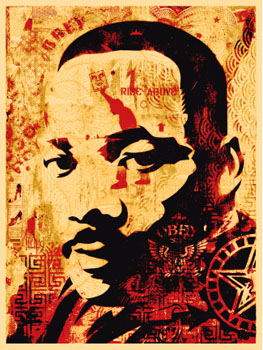
obey & patty on mlk day.

In this time of despair and pain, hope, peace and reconciliation could not be more relevant. Let us remember Dr. King. Let us not sentimentalize Dr. King. But let us particularly engage with the obedience, patience, non-violence, boldness, and integrity he displayed. Let us not raise him up too high, for he would most likely defer to the shoulders he stood on, as we may stand on his shoulders today. Mostly, let us understand the root of his metaphors and imagery and the source of his hope in the God who saves (Yeshua!) and the One who is near (Emmanuel!).

Amos 5:24 (Peterson's The Message)
"Do you know what I want?
I want justice—oceans of it.
I want fairness—rivers of it.
That's what I want. That's all I want."


"Up To The Mountain (MLK Song)"
by Patty Griffin

I went up to the mountain
Because you asked me to
Up over the clouds
To where the sky was blue
I could see all around me
Everywhere
I could see all around me
Everywhere

Sometimes I feel like
I've never been nothing but tired
And I'll be walking
Till the day I expire
Sometimes I lay down
No more can I do
But then I go on again
Because you ask me to

Some days I look down
Afraid I will fall
And though the sun shines
I see nothing at all
Then I hear your sweet voice, oh
Oh, come and then go, come and then go
Telling me softly
You love me so

The peaceful valley
Just over the mountain
The peaceful valley
Few come to know
I may never get there
Ever in this lifetime
But sooner or later
It's there I will go
Sooner or later
It's there I will go

11 January 2009

Elijah, Kings, & Rembrandt

Here is a link and some pictures from a great website Dr. Davis posted for us during our treatment of Kings and specifically Elijah. Rembrandt's sketches always portray brilliant depth and nuance even in their seemingly hurried and un-detailed form. I am learning to look to and that I owe much to artists and non-traditional commentators for my interpretation, illumination and edification by the Holy Spirit.
LINK

Elijah the Prophet by the Brook of Cherith

God's Judgment on Mount Carmel

Elijah On Mount Horeb

reftagger